

Ford Focus Discontinued: Why Ford Ended Its Iconic Compact Car Line
For more than two decades, the Ford Focus was one of the world’s most recognizable compact cars — practical, fuel-efficient, affordable, and stylish enough to appeal to a wide range of drivers. But the automotive landscape has changed dramatically, and Ford has officially moved toward a future where small sedans and hatchbacks no longer fit into its long-term strategy.


The result?
The Ford Focus has been discontinued, marking the end of a model that once dominated the compact segment.
In this article, we explore why Ford made the decision, what it means for the industry, and how customers are reacting to the end of an era.
⭐ A Global Shift Away From Small Cars
The discontinuation of the Ford Focus isn’t a random move — it is part of a much larger shift happening across the global automotive market.
Over the last several years:
- SUVs and crossovers have become the best-selling category worldwide.
- Consumers want more space, higher seating, and improved versatility.
- Automakers have been investing heavily in electric vehicles (EVs) and hybrid crossovers rather than compact sedans.
- Profit margins on small cars have dropped significantly.
For Ford, the message was clear:
Focus resources on trucks, SUVs, and electric models — not compact cars.
🚗 End of an Era: What Made the Focus Special
The Ford Focus first arrived in the late 1990s and quickly became a global bestseller thanks to:
- Fun-to-drive handling
- Comfortable ride
- Fuel efficiency
- Modern designs through each generation
- A budget-friendly price
The Focus served families, first-time drivers, commuters, and even car enthusiasts (thanks to the sporty Focus ST and Focus RS). Its discontinuation feels like the closing of a chapter that defined Ford’s small-car legacy.

🔍 Why Ford Discontinued the Focus
1. Consumer Demand Shift
Drivers are now choosing crossovers like the Ford Escape and Ford Bronco Sport instead of compact hatchbacks.
2. Higher Profit in Larger Vehicles
SUVs and trucks generate stronger profits compared to compact sedans.
3. EV Transition Strategy
Ford is channeling major investment into its electric lineup and commercial vehicles. Small internal-combustion cars no longer align with its future product roadmap.
4. Production Optimization
Manufacturing plants have been restructured for EVs and larger models, making small-car production less viable.
🌍 Impact on Global Markets
The discontinuation affects several regions differently:
- North America moved away from the Focus earlier as Ford shifted to SUVs and pickups.
- Europe, where the Focus remained popular for longer, has also transitioned as the company focuses on electrification.
- Asia and South America saw similar shifts as consumer preferences evolved.
The Ford Focus won’t return in the near future, especially with Ford doubling down on EVs and hybrid SUVs.
🚘 What Does This Mean for Ford Drivers?
For current Focus owners:
- Parts and service will still be available for many years.
- The model remains known for reliability and easy maintenance.
- Used Focus prices may stay stable due to continuing demand for affordable compact cars.
For new car buyers:
Ford will push shoppers toward:
- Ford Escape
- Ford Bronco Sport
- Ford Maverick
- Ford Mustang Mach-E (EV option)
These models now represent Ford’s main strategy for the compact and mid-size market.
The New Lincoln Navigator Is a Beauty, but Is It the Luxury SUV Standard Bearer?
🔮 The Future Without the Focus
Ford’s priorities are now clear:
Electric vehicles. Crossovers. Trucks. High-performance models.

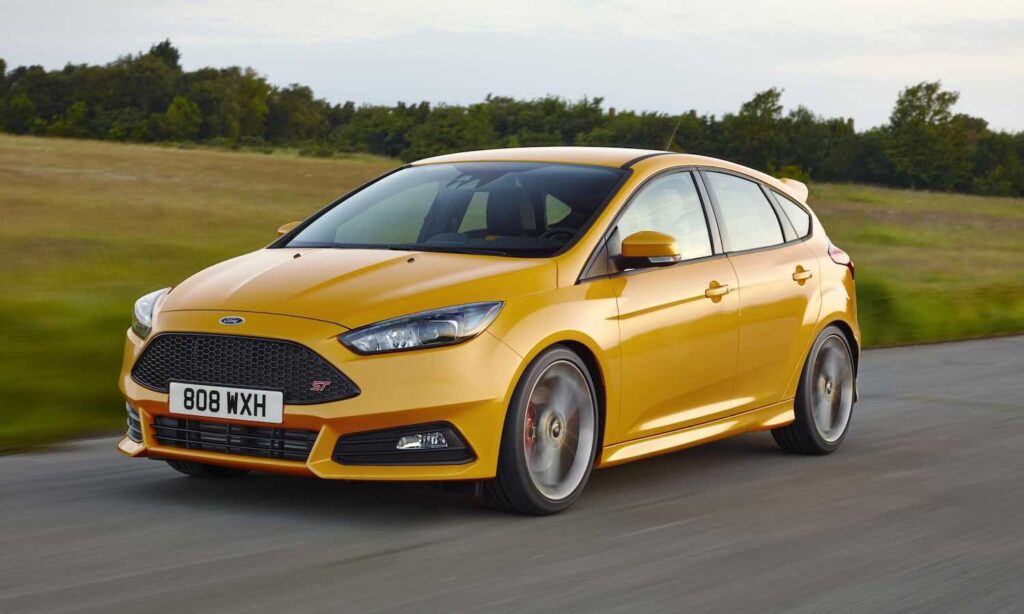
While the Ford Focus may have exited the stage, its influence lives on in modern Ford design, technology, and engineering. For millions of drivers, the Focus was more than just a car — it was a dependable partner in everyday life.
The discontinuation marks the end of a legendary run, but also the beginning of Ford’s next chapter.
FAQs About the Ford Focus Discontinuation
Q1: Why did Ford stop making the Focus?
Because consumer demand shifted toward SUVs and Ford is investing more in electric and larger vehicles.
Q2: Will the Focus ever return?
There are no signs of a comeback, especially with Ford’s EV-focused strategy.
Q3: Can I still buy parts for a Ford Focus?
Yes. Parts, service, and maintenance support will continue for many years.
Q4: Is the Ford Focus still a good used car?
Absolutely. It remains one of the most reliable and affordable compact cars on the used market.
Q5: What Ford models replace the Focus?
The Ford Escape, Bronco Sport, Maverick, and Mustang Mach-E now fill the space it once occupied