
In a recent public appearance, U.S. Vice President JD Vance made a statement about his wife Usha Vance’s religion that quickly stirred conversation online. The comment, which touched on faith and personal beliefs, has become a trending topic across political and social media platforms.
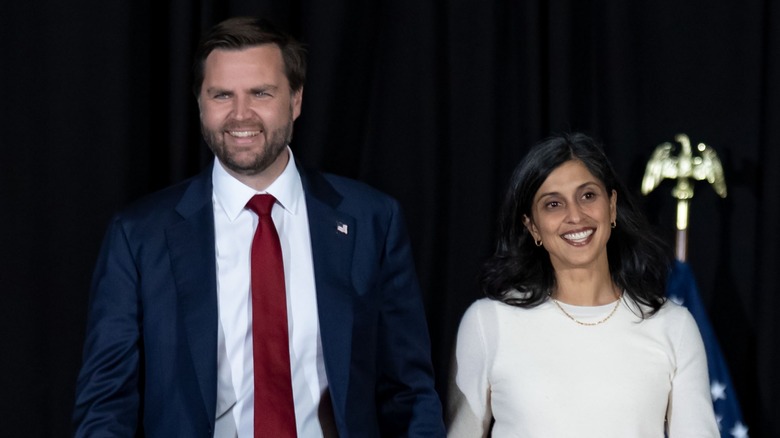
What Did JD Vance Say?
During a Q&A session, JD Vance was asked about his personal faith and how religion plays a role in his family life. The Vice President responded candidly, saying he “hopes” his wife, Usha, who practices Hinduism, would one day convert to Christianity.
However, he quickly clarified that her decision would always be her own, adding that faith is a deeply personal matter and something that cannot be forced.
“I’m a Christian. I’d love for my wife to share that faith with me,” Vance said.
“But I also believe in love and respect — her faith is a part of who she is, and I honor that.”
Who Is Usha Vance?
Usha Vance (née Chilukuri) was born to Indian immigrant parents and raised in a Hindu household. She is a lawyer and Yale Law School graduate, where she met JD Vance. The couple married in 2014 and share three children.
While Usha has rarely spoken publicly about her faith, she has attended Christian services with her husband and family. Friends of the couple say the two share a deep mutual respect for each other’s traditions.

Reactions from the Public
JD Vance’s comment has generated a wave of reactions online. Some praised his honesty, while others criticized him for bringing religion into the political conversation.
One user on X (formerly Twitter) wrote:
“It’s refreshing to hear a politician talk openly about faith without sounding hateful.”
Another commented:
“Religion should stay private. No spouse should feel pressured to convert.”
Despite the divided opinions, most observers agreed that Vance’s tone was respectful, and his statement seemed more personal than political.
Heather Gay Confronts Mormon Church Abuse in Bravo’s New Series ‘Surviving Mormonism’ 2025
Faith and Politics in America
Religion has long been a sensitive topic in U.S. politics. As Vice President, JD Vance’s comments highlight the ongoing cultural conversations around interfaith relationships and religious freedom.
Experts note that Vance’s remarks could resonate with voters who value traditional family values, while also sparking discussion about respect for diversity within marriages.
Final Thoughts
JD Vance’s statement about his wife’s religion wasn’t intended as controversy — but it certainly got people talking. His openness about faith, love, and respect within an interfaith marriage shows how personal beliefs can coexist with mutual understanding.

As the Vice President continues to shape his political identity, moments like these offer a glimpse into the human side of leadership — one where faith, family, and respect all play a part.